The initial coin offering was a 2017 answer to a 2017 problem: how does a team with no product, no revenue and no access to venture capital raise money from a crowd that wants in early? It worked, briefly, and then it worked too well. By the time the market had finished digesting that cycle, "presale" had become a word that regulators, exchanges and most retail participants treat with suspicion by default.
Yet projects still launch tokens the same way, with a private round, a public sale and a listing timed to let the first two exit. If you are building a product in 2027 that genuinely needs a token, this is the wrong template, and the reasons are not only regulatory. The structure itself points everyone's incentives in different directions.
This piece argues for the alternative, "utility first, liquidity later", and uses one concrete case, the $AFZY token behind Affizy Network, to show what it looks like when written down.
Disclaimer: $AFZY is a utility token. Nothing in this article is investment advice, and nothing here should be read as implying a future price, market value or return.
The climate has changed
Two general facts about the environment shape every token launch decision now.
In the European Union, the Markets in Crypto-Assets regulation (MiCA) is in application. In broad terms it requires issuers of crypto-assets offered to the public to publish a compliant white paper, meet disclosure and conduct obligations, and work through licensed service providers for trading and custody. The details depend on the asset type and the issuer, and anyone launching should take specific legal advice, but the direction is clear: public token sales to EU residents are a regulated activity, not a Telegram announcement.
In the United States, the question of whether a token sale constitutes a securities offering has driven years of enforcement and litigation. The posture shifts with administrations and court rulings, but the practical lesson for a small team is stable: selling a token to the public with the implicit promise that the team's efforts will make it more valuable is exactly the fact pattern that attracts scrutiny.
Neither regime bans tokens. Both make "raise money by selling a token before it does anything" the most legally exposed route available.

Why presales misalign incentives
Set the law aside for a moment. A presale is a bad idea for structural reasons.
The buyer and the user are different people. A presale buyer wants the token to rise in price between purchase and listing. A user wants the token to be cheap and plentiful so they can use the product. When the same token serves both groups, the team has to choose, and the presale buyer got there first with money.
The team is paid before the product works. Capital arriving before utility exists removes the strongest feedback loop a small team has. If the product fails, the token has already been sold.
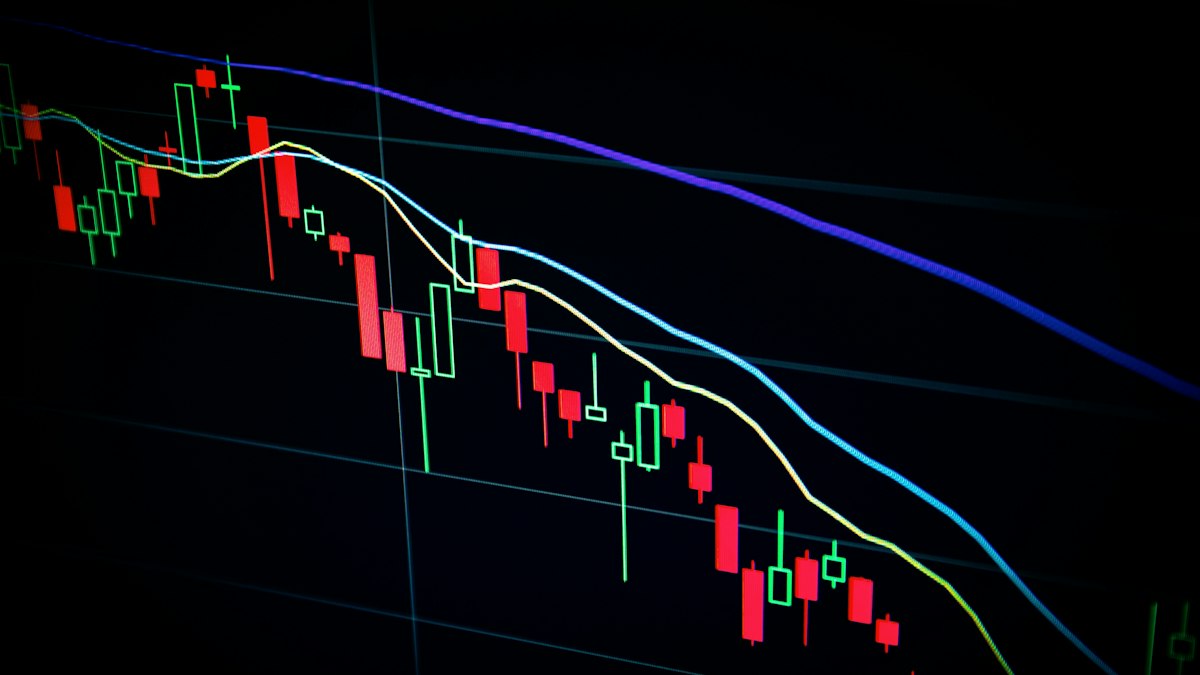
Listing day becomes an exit, not a start. Private-round participants hold tokens at a cost basis far below the listing price. Their rational move is to sell into the first liquidity, which is provided by the retail users the product was supposedly built for. The chart that results, a spike and a long decline, is so common it has a shape people recognise.
Vesting is a patch, not a cure. Cliffs and linear unlocks delay the problem. They do not change the fact that there is a class of holders whose relationship with the token is purely financial.
What "utility first, liquidity later" means
The alternative is to let the token exist, be earned and be spent inside the product for a long time before it can be traded at all. Sequence matters:
- Earn. Users receive the token for doing things the platform values. No one buys it.
- Spend. The platform offers things worth buying with it, so the token circulates and leaves wallets.
- Measure. Over months, the team learns the real demand curve: how much is earned, how much is spent, which sinks people actually use.
- List. Only then is the token made transferable and given a market, with the parameters informed by step 3 rather than by a fundraising target.
Under this model the launch is not a fundraising event. The team funds itself from the product's revenue, which forces the product to have some. The token's first holders are users who earned it, not investors who bought it. And when liquidity arrives, there is no cheap-cost-basis class waiting to sell.
The price of this discipline is speed. A team cannot raise a treasury in a weekend. That is the trade.
The $AFZY case, as written
Affizy is a crypto-native advertising network on BNB Chain, built by a three-person bootstrapped team without venture funding or any token sale. Its token, $AFZY, has a total supply of 200,000,000 and follows the sequence above. Here is how each step is implemented today.
Earning
Publishers receive $AFZY through hourly impression bonuses on top of their USDT revenue share. Users earn it through Quests (posting streaks, follower and engagement milestones on the in-app Pulse social layer), through Marketplace cashback (both sides of an order receive 10 AFZY per $1 of order value). Nobody can buy it.
Spending
The token pays for Studio Affizy, the in-app creative tool: template banners, AI-generated creatives, remixes and a 70-second branded promo video. It pays for Pulse Shop items: vanity usernames, avatar frames, cover banners, profile spotlights and a limited Founding Member badge. More sinks are planned. The important property is that these are things people on an ad platform plausibly want, so spend reflects use rather than speculation.
The Utility Reserve
Every $AFZY spent on the platform accumulates in a Utility Reserve. Rather than returning to circulation, it is held until the token generation event, when a one-time ceremonial transaction sends 50% of the reserve to burn and 50% to a staking rewards pool. The split ties the eventual supply reduction and the staking rewards directly to how much the token was actually used before it ever traded.
Listing and after
The plan is a fair launch: no ICO, no presale, no private sale. Liquidity is listed on PancakeSwap at TGE, currently targeted for Q2 2027. After listing, 1 to 2% of platform revenue goes to buyback and burn, liquidity-pool tokens are locked for at least 24 months, and team tokens are subject to a 12-month cliff followed by 36 months of linear vesting.
Until TGE, $AFZY is non-transferable and has no market price. That is deliberate. A non-transferable token cannot be pumped, cannot be dumped and cannot be sold to someone who thinks they are buying an investment.
What this model does not solve
It would be dishonest to present the approach as free of risk.
- Liquidity depth is not guaranteed. A fair launch puts a token on a DEX with whatever liquidity the team can seed from revenue. It will be thinner than a VC-backed listing.
- Utility must be real. If the sinks are decorative, the token is decorative. Every sink has to be something people would pay for anyway.
- Patience is a cost. Users earning a non-transferable token for a year are trusting that the team ships the listing. Build-in-public habits, such as a public changelog and a visible release cadence, are how that trust is maintained, but they are habits, not guarantees.
- Regulation still applies. Fair launch reduces the fundraising exposure. It does not exempt a token from rules that apply to trading, custody or marketing.
A checklist for any 2027 utility token
If you are evaluating a token launch, yours or someone else's, these questions separate the two models quickly:
- Can the token be earned by using the product before it can be bought?
- Is there anything to spend it on today, and is that spend tracked publicly?
- Who holds tokens at a cost basis below the listing price, and what are their lock-ups?
- Is the LP locked, and for how long?
- Does any share of real revenue flow back into the token, and is that share stated?
- Is the team's own allocation subject to a cliff and vesting longer than a single market cycle?
A project that answers all six cleanly may still fail. A project that cannot answer them has told you what the token is for.
The platform where $AFZY is earned and spent is at https://affizy.network, and the full mechanics are published on the Affizy site.
$AFZY is a utility token with no market price before TGE. This article is not investment advice.